When buying an inflatable stand up paddle board (SUP), two terms appear frequently in product specifications: PVC and drop stitch. Some buyers compare them as if they were two alternative materials, but they actually serve different purposes in an inflatable paddle board. PVC forms the outer skin that protects the board and helps it retain air, while drop stitch technology creates the internal structure that allows the board to maintain its shape under pressure.
Understanding how these two components work together is important when choosing an inflatable SUP board for recreational use, touring, yoga, or professional water sports. For wholesalers, distributors, and outdoor sports brands, material construction also affects product positioning, durability, performance, and purchasing decisions.
So, what should you look for when comparing PVC and drop stitch? Here is a practical guide to help you understand the differences and choose the right board.
1. What Is PVC in an Inflatable SUP Board?
PVC, or polyvinyl chloride, is one of the most widely used materials in inflatable water sports products. In an inflatable paddle board, PVC is commonly used to create the outer surface, side rails, and reinforced structural layers.
Its main job is to provide an airtight and protective outer shell. The PVC layers help the board withstand regular contact with water, sunlight, sand, and other environmental conditions encountered during outdoor activities.
Depending on the board design, manufacturers may use different PVC thicknesses, layer combinations, and reinforcement methods. Some boards feature single-layer PVC construction, while others use double-layer PVC or additional reinforced sections to improve strength and durability.
Common advantages of PVC in inflatable SUP construction include:
- Water resistance: PVC provides an airtight outer surface when properly manufactured and sealed.
- Flexibility: It can adapt to the inflatable board's shape during inflation and deflation.
- Durability: Reinforced PVC construction can improve resistance to everyday wear and abrasion.
- Design flexibility: PVC surfaces can accommodate different colors, patterns, and brand graphics.
- Manufacturing versatility: Different PVC specifications can be selected for different product positioning and performance requirements.
However, PVC alone does not provide the internal structure needed to maintain the shape of a high-pressure inflatable SUP. This is where drop stitch technology becomes important.
2. What Is Drop Stitch Technology?
Drop stitch is an internal construction technology widely used in inflatable SUP boards. It consists of two fabric layers connected by thousands of closely spaced polyester threads. These threads connect the upper and lower surfaces and help prevent the board from expanding excessively when air is pumped inside.
When the board is inflated, the internal threads keep the top and bottom surfaces at a relatively consistent distance. This creates a flat, firm structure instead of allowing the board to become a rounded inflatable tube.
Drop stitch construction is particularly important because an inflatable paddle board needs to balance portability with rigidity. A properly designed internal structure helps the board maintain its shape while supporting the rider's weight on the water.
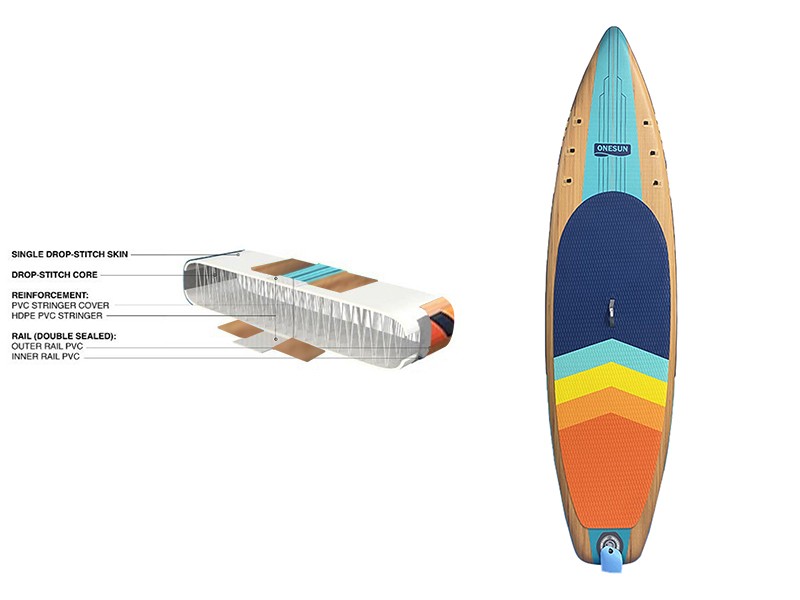
The main benefits of drop stitch technology include:
- Improved rigidity: The internal thread structure helps the inflated board maintain a flatter shape.
- Better stability: A suitable drop stitch construction supports a stable platform for paddling.
- Pressure resistance: It helps the board withstand internal air pressure within its specified operating limits.
- Lightweight construction: It allows manufacturers to create a relatively rigid board without using a solid core.
- Portability: The board can be deflated and packed for storage and transportation.
The quality of drop stitch fabric also matters. Thread density, material strength, fabric bonding, and manufacturing precision all influence the final board structure. Therefore, buyers should not judge an inflatable SUP solely by whether it uses drop stitch technology.
3. PVC vs. Drop Stitch: What Is the Actual Difference?
PVC and drop stitch are not competing materials. They work together as different parts of an inflatable paddle board. PVC provides the outer protective and airtight layers, while drop stitch forms the internal structure that supports the board's shape.
| Comparison |
PVC |
Drop Stitch |
| Main function |
Outer airtight and protective layers |
Internal structural support |
| Construction |
Flexible polymer material |
Two fabric surfaces connected by internal threads |
| Main benefit |
Air retention and surface protection |
Rigidity and shape retention |
| Design options |
Different thicknesses, layers, and finishes |
Different thread structures and fabric specifications |
| Role in SUP performance |
Protection and airtight construction |
Structural firmness and stability |
For this reason, most quality inflatable SUP boards use both technologies rather than choosing one over the other. The final performance depends on how well the materials are combined, bonded, and reinforced during production.
4. How Does Material Construction Affect SUP Performance?
When comparing inflatable paddle boards, material specifications should always be considered alongside board dimensions, inflation pressure, weight capacity, and intended use.
Rigidity and stability
A well-designed drop stitch core helps an inflatable SUP maintain its shape under pressure. This is especially important for beginners who need a stable platform and for experienced paddlers who want predictable handling. PVC reinforcement also contributes to the overall structure by protecting the internal construction.
Durability and service life
Durability depends on more than the number of PVC layers. Material quality, rail construction, adhesive or fusion technology, seam finishing, and quality inspection all affect long-term performance. Even a board with multiple PVC layers may develop problems if its bonding process is inconsistent.
Weight and portability
Inflatable SUP boards are popular because they can be deflated, folded, and transported in a carrying bag. However, additional reinforcement may increase the overall weight. Buyers should balance structural strength with portability based on how the board will be used.
Appearance and customization
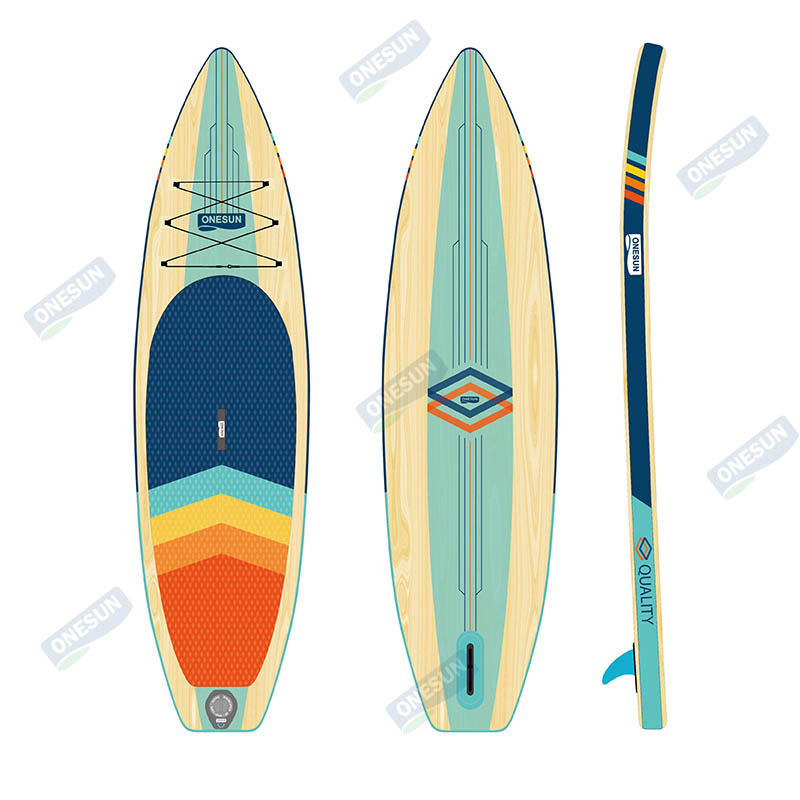
PVC construction also gives manufacturers flexibility in product appearance. Different colors, printed graphics, EVA deck pad designs, and accessory combinations can help outdoor sports brands develop distinctive product collections.
5. Which Inflatable SUP Construction Is Suitable for Different Activities?
Different paddling activities have different requirements. Instead of focusing on one material specification, buyers should consider the complete board design.
- Recreational paddling: All-around SUP boards are a practical choice for lakes, calm rivers, and casual water activities. They typically prioritize balance, versatility, and ease of use.
- Touring and longer paddling trips: Longer board shapes and suitable structural rigidity can help improve tracking and paddling efficiency.
- SUP yoga: Wider boards provide more space for movement and help create a stable platform for fitness activities.
- Racing and performance paddling: Board shape, length, width, weight, and stiffness become particularly important. Buyers should evaluate the complete design rather than material names alone.
For example, the All Around SUP Board from ONESUN uses a combination of drop stitch and PVC materials. Its 11-foot design is intended for general recreational paddling and comes with a range of standard accessories.
For water fitness applications, the ONESUN Yoga SUP Board features a wider design intended to provide more room for water yoga activities. It also uses drop stitch and PVC construction.

6. What Should Wholesale Buyers Check Before Ordering?
For importers, distributors, retailers, and private-label brands, choosing an inflatable SUP board involves more than checking its material description. Product consistency, customization options, production capacity, and quality control are equally important.
Before placing a bulk order, consider the following points:
- PVC specifications: Ask about PVC thickness, layer construction, reinforcement, and material quality.
- Drop stitch quality: Check the fabric construction, internal thread structure, and bonding consistency.
- Inflation pressure: Confirm the recommended working pressure and maximum pressure specified for the model.
- Board dimensions: Compare length, width, thickness, and maximum recommended load capacity.
- Rail construction: Ask how the side rails are reinforced and sealed.
- Quality testing: Check whether the manufacturer performs air-leak inspections, pressure tests, and appearance inspections.
- OEM and ODM services: Confirm available options for logo printing, colors, graphics, packaging, and accessories.
It is also useful to request product samples before confirming a large order. Testing samples under actual conditions can help buyers evaluate stability, handling, inflation performance, and overall workmanship.
7. Why Choose an Experienced Inflatable SUP Manufacturer?
Material specifications only tell part of the story. The manufacturing process determines how effectively PVC and drop stitch components work together.
Consistent bonding, accurate cutting, reliable rail sealing, and careful quality inspection are essential for producing inflatable paddle boards that perform reliably. A manufacturer with established production processes can also provide more consistent results across repeat wholesale orders.
ONESUN Sports is an outdoor sports equipment manufacturer established in 2015, specializing in inflatable SUP boards, kayaks, inflatable boats, and other outdoor recreational products. The company integrates product development, manufacturing, and export services, with two production centers covering approximately 98,300 square meters in total construction area.
For distributors and brands developing their own paddle board collections, ONESUN offers product customization and manufacturing support. Whether you are sourcing all-around SUP boards, yoga paddle boards, or other inflatable water sports products, discussing material specifications and intended applications with the manufacturer is a practical starting point.
Ultimately, PVC and drop stitch should not be treated as an either-or choice. A reliable inflatable SUP board needs a suitable combination of outer material, internal structure, reinforcement, and manufacturing quality. Understanding these details helps buyers make more informed purchasing decisions and select products that match their target market.
Frequently Asked Questions
1. Is PVC or drop stitch better for an inflatable SUP board?
They serve different purposes, so neither is a direct replacement for the other. PVC forms the airtight outer layers, while drop stitch provides internal structural support. Most quality inflatable SUP boards combine both to achieve suitable rigidity, durability, and portability.
2. Does drop stitch make an inflatable paddle board more rigid?
Yes. The internal threads connect the upper and lower fabric surfaces, helping the board maintain a flatter shape when inflated. Actual rigidity also depends on construction quality, board dimensions, inflation pressure, and reinforcement.
3. How many layers of PVC should an inflatable SUP have?
There is no universal ideal layer count. Single-layer, double-layer, and reinforced PVC constructions can all be used depending on the product design. Buyers should compare actual material specifications, weight, bonding quality, and intended application rather than relying on layer count alone.
4. What inflation pressure is suitable for a drop stitch SUP board?
The recommended pressure varies by model and construction. Many recreational inflatable SUP boards operate around 12–15 PSI, but buyers should always follow the manufacturer's specified working pressure and never exceed the stated maximum pressure.
5. What should I look for when sourcing inflatable SUP boards wholesale?
Check PVC specifications, drop stitch construction, board dimensions, inflation pressure, weight capacity, rail reinforcement, and quality inspection procedures. For private-label orders, also confirm logo printing, color customization, packaging, accessories, sample approval, and production lead times.



 IPv6 RÉSEAU PRIS EN CHARGE