Vous constaterez que la conception de la coque et les profils de rocker rendent le bateau performant aussi bien en eaux vives qu'en eaux calmes. kayaks gonflables La forme de la coque, et notamment le rocker, est différente. Le design de la coque correspond à la forme du fond du kayak. Le rocker indique la courbure des extrémités. Ces éléments sont importants car ils influencent le comportement du kayak sur l'eau.
- Les kayaks d'eau vive ont un fond court et plat et une forte courbure. Cela permet de virer rapidement et d'éviter les obstacles.
- Les kayaks pour eaux calmes ont une coque longue et arrondie avec un rocker moins prononcé. Cela permet de pagayer en ligne droite pendant longtemps.
Choisir le bon modèle assure votre sécurité et facilite la pratique du kayak en toutes circonstances.
Points clés à retenir
- Choisissez votre kayak en fonction du type de terrain sur lequel vous naviguez. Les kayaks d'eau vive sont rapides et maniables. Les kayaks d'eau calme permettent une navigation rectiligne sur les eaux calmes.
- Apprenez-en davantage sur les formes de coque. Les coques planantes sont idéales pour les eaux vives. Elles permettent des virages rapides. Les coques à déplacement sont performantes en eau calme. Elles offrent vitesse et stabilité.
- Le profil de rocker est important. Un rocker prononcé facilite les virages en eaux agitées, tandis qu'un rocker faible permet de naviguer en ligne droite en eaux calmes.
- Recherchez les kayaks d'eau vive équipés d'un système d'auto-vidange. Ils évacuent l'eau rapidement. Les kayaks d'eau calme doivent être totalement étanches afin de protéger votre matériel.
- Pensez aux matériaux. Les matériaux plus épais résistent mieux aux rapides. Les matériaux plus légers facilitent le transport des kayaks en eau calme.
Kayaks gonflables : conception de la coque
Coques planantes vs. coques à déplacement
Lorsque vous observez les kayaks gonflables, vous remarquerez deux formes de coque principales : planante et à déplacement. Chaque forme modifie la façon dont votre kayak se déplace et se comporte sur l’eau.
- Les coques planantes ont un fond plat. On les trouve sur la plupart des bateaux. kayaks gonflables pour eaux vivesCette forme permet de glisser sur l'eau. Vous pouvez virer rapidement et franchir les vagues ou les obstacles avec aisance. Les coques planantes offrent un meilleur contrôle en cas de besoin de réaction rapide.
- Les coques à déplacement ont un fond arrondi ou en forme de V. Elles fendent l'eau au lieu de glisser à sa surface. On retrouve ce type de conception sur les kayaks gonflables pour eaux calmes. Les coques à déplacement facilitent le pagayage en ligne droite et permettent de maintenir sa vitesse. Elles tolèrent mieux les petites erreurs de pagayage.
Voici un tableau pour vous aider à comparer les principaux types de coques que vous pourriez rencontrer :
| Type de coque | Caractéristiques | Impact sur la performance |
|---|
| Coque plate | Grande stabilité primaire | Idéal pour les eaux calmes ou vives, déconseillé pour les eaux libres agitées. |
| Coque ronde | Bonne vitesse et stabilité secondaire | Utilisé en kayak de mer, il se comporte bien dans les vagues. |
| Coque en V | Rapide, trajectoire rectiligne, stabilité primaire réduite | Fend l'eau, nécessite de l'habileté pour l'équilibrer |
| Coque de ponton | Stable, bonne tenue de cap, supporte les petites vagues | Idéal pour les débutants, mais pas pour les grosses vagues. |
Stabilité et suivi
La conception de la coque influence la stabilité de votre kayak gonflable et sa tenue de cap. Les coques plates offrent une navigation stable, notamment à l'arrêt ou à faible vitesse. C'est pourquoi elles sont prisées en eaux vives, où il est essentiel de rester à flot même par mer agitée. Le plancher en drop-stitch rigidifie et aplatit davantage le fond, permettant ainsi de fendre les vagues et de maintenir l'équipement en place.
Pour pagayer sur des lacs ou des rivières calmes, une coque en V ou ronde vous permettra d'aller plus vite et de garder le cap. Le Sea Eagle FastTrack, par exemple, est doté d'une coque en V. Cette forme favorise une pagaie efficace et un bon contrôle de la direction, surtout avec un aileron. Les planchers à longerons en I, avec leurs chambres nervurées, améliorent la stabilité et la tenue de cap, ce qui en fait un choix judicieux pour les eaux calmes.
Conseil : Choisissez une forme de coque adaptée au type de terrain sur lequel vous souhaitez pagayer. Les coques planantes sont idéales pour les eaux vives, tandis que les coques à déplacement excellent sur les eaux calmes.
Les kayaks gonflables existent en de nombreuses formes, vous permettant ainsi de trouver celui qui correspond à vos besoins. Si vous souhaitez essayer un kayak gonflable en TPU, vous trouverez des coques similaires, mais vérifiez toujours le design avant d'acheter.
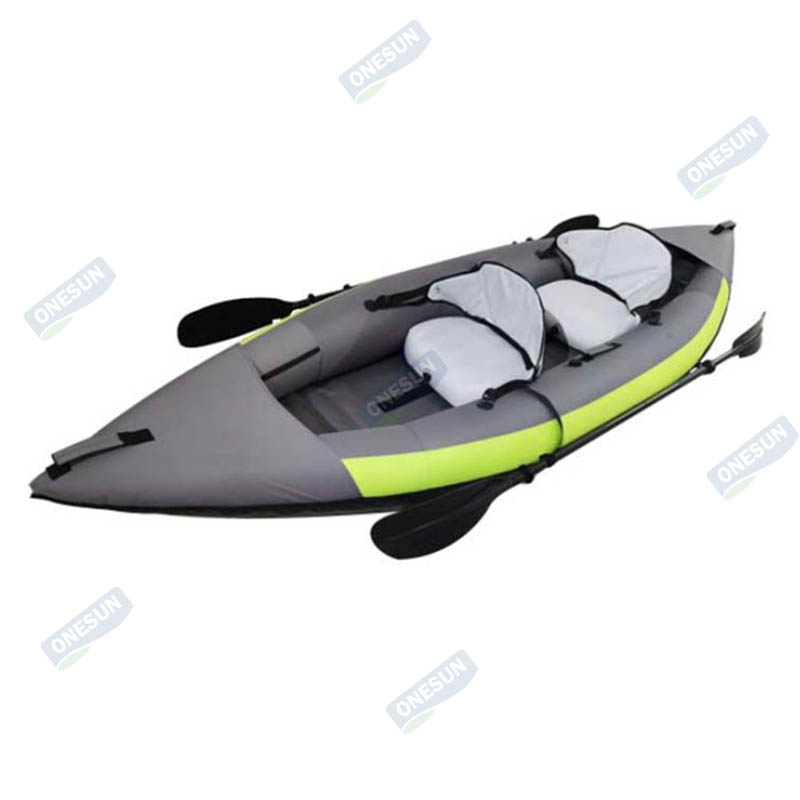
Profils de rocker dans les kayaks gonflables
Qu'est-ce qu'un rocker ?
Vous remarquerez peut-être que certains kayaks gonflables présentent une courbure vers le haut à leurs extrémités. Cette courbure s'appelle un rocker. Le rocker signifie que la proue et la poupe s'élèvent au-dessus de la ligne de flottaison. Cette forme modifie la maniabilité et la capacité de virage du kayak.
- Le rocker est la courbe longitudinale qui va de l'avant à l'arrière du kayak.
- Un kayak avec un rocker prononcé a les deux extrémités plus relevées.
- Moins de courbure signifie que le kayak reste plus à plat et touche davantage l'eau.
Le rocker de la coque influence la maniabilité de votre kayak. Un kayak avec un rocker plus prononcé permet des virages plus rapides. La ligne de flottaison plus courte facilite les rotations et permet d'éviter les rochers et les troncs d'arbres. À l'inverse, un kayak avec un rocker moins prononcé offre une meilleure stabilité directionnelle. La ligne de flottaison plus longue favorise une navigation en ligne droite, idéale en eaux calmes.
Remarque : Le rocker est important pour la maniabilité et la tenue de cap. Il est conseillé de vérifier le profil de rocker avant de choisir votre kayak gonflable ou votre bateau gonflable en TPU.
Rocker haut vs. bas
Vous verrez deux profils de rocker principaux : haut et bas. Chaque profil est optimal dans des conditions d’eau différentes.
| Profil de bascule | Courbe de proue et de poupe | Longueur de la ligne de flottaison | Maniabilité | Suivi | Idéal pour |
|---|
| Haut-renard | Plus de courbes | Plus court | Virages plus faciles | Moins | Eaux vives |
| Basse rocker | Moins de courbes | Plus long | Virages plus serrés | Plus | Eau plate |
Un rocker prononcé facilite le franchissement des obstacles en eaux vives. La proue se soulève, ce qui permet d'atterrir les sauts et de rester au-dessus des vagues. Vous constaterez qu'un rocker prononcé rend votre kayak plus tolérant aux chocs dans les zones agitées. Un rocker faible, quant à lui, favorise la vitesse et la stabilité directionnelle. Sur les lacs ou les rivières calmes, un rocker faible permet de glisser en douceur et de maintenir le cap.
Les kayaks gonflables à forte courbure sont idéaux pour les eaux vives. Ils permettent des virages rapides et facilitent l'évitement des obstacles. Une faible courbure est plus adaptée aux eaux calmes, pour pagayer en ligne droite et parcourir de plus grandes distances. Lors du choix d'un kayak gonflable en TPU, tenez compte du profil de courbure pour l'adapter à votre style de pagayage.
Conseil : Choisissez un rocker prononcé pour une meilleure agilité en rapides. Optez pour un rocker faible pour la vitesse et la stabilité directionnelle en eau calme.
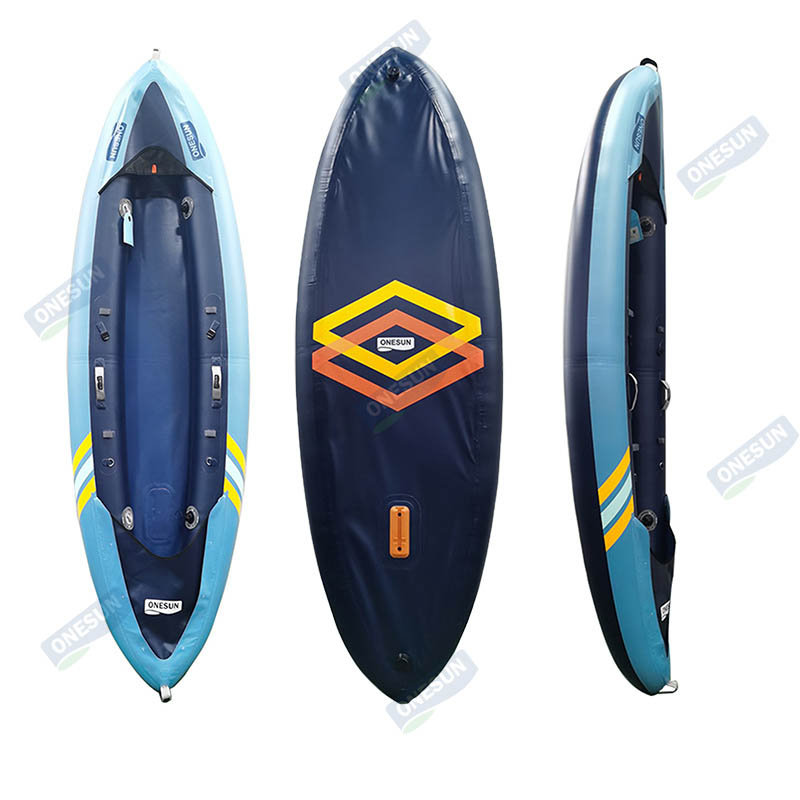
Kayaks gonflables pour eaux vives : Caractéristiques
Manœuvrabilité et contrôle
En eaux vives, il faut virer rapidement. Les kayaks gonflables pour eaux vives sont courts et larges. Cette forme facilite les virages et permet d'éviter les rochers aisément. Leur coque relevée, avec des extrémités incurvées vers le haut, permet de franchir les vagues et de changer de direction rapidement. Virer dans les rapides ne demande pas beaucoup d'efforts. La coque plate assure un bon contrôle du kayak même en eaux agitées.
- Sa forme courte et large facilite les virages.
- Le rocker haut permet de changer de direction rapidement.
- La coque plate vous offre un bon contrôle même en eaux agitées.
Conseil : Choisissez un kayak doté de ces caractéristiques si vous souhaitez pagayer sur des rivières rapides. Vous aurez un meilleur contrôle.
Auto-videur et sans aileron caudal
En eaux vives, les éclaboussures sont fréquentes et l'eau s'infiltre souvent dans le kayak. Il est donc préférable d'éviter de devoir s'arrêter trop souvent pour vider son embarcation. Les kayaks gonflables pour eaux vives sont équipés d'un plancher autovideur. Ce plancher, perforé, permet une évacuation rapide de l'eau, vous assurant ainsi une meilleure sécurité et un confort optimal. La plupart des kayaks pour eaux vives sont dépourvus d'aileron arrière. Si cet aileron facilite la navigation en ligne droite, il peut cependant s'accrocher aux rochers. Sans aileron, la maniabilité est meilleure et vous évite de rester coincé.
| Fonctionnalité | Kayaks d'eau vive | Kayaks d'eau calme |
|---|
| Drainage | Autovideuse avec trous pour un retrait rapide | Bouchons de vidange pour garder le matériel au sec |
| Nageoire caudale | Généralement aucun pour une meilleure agilité | Souvent inclus pour les tracés rectilignes |
Remarque : L’auto-vidange vous permet de rester en mouvement même en eaux agitées. L’absence de nageoire caudale vous permet de virer en toute sécurité.
Matériaux durables
Pour la navigation en eaux vives, il vous faut un kayak robuste. Les rochers coupants et les forts courants peuvent endommager les embarcations fragiles. Les kayaks gonflables pour eaux vives sont fabriqués avec des matériaux épais et résistants, tels que des vessies en uréthane, du polyuréthane 1100 deniers, du PVC haute résistance et du tissu TPU renforcé. Ces matériaux résistent aux coupures, aux éraflures et aux dommages causés par le soleil. Des coutures solides, comme les coutures soudées par radiofréquence, assurent l'étanchéité et prolongent la durée de vie de votre kayak.
| Type de matériau | Avantages |
|---|
| vessies en uréthane | Réparation facile des fuites, remplacement rapide |
| Polyuréthane 1100 deniers | Résistant aux chocs, coutures durables |
| PVC haute résistance | Résiste aux coupures, aux éraflures et aux dommages causés par le soleil |
| Tissu TPU renforcé | Résistant aux perforations, flexible par temps froid |
| Soudures RF | Des coutures solides qui empêchent l'eau de pénétrer. |
Avertissement : Des matériaux robustes vous protègent et vous permettent de profiter de votre voyage en toute tranquillité.
Les kayaks gonflables pour eaux vives vous offrent sécurité, contrôle et plaisir en eaux agitées.
Kayaks gonflables pour eaux calmes : Caractéristiques
Suivi et efficacité
Vous souhaitez que votre kayak glisse droit sur une eau calme. Les kayaks gonflables pour eaux calmes sont conçus pour faciliter la navigation. Nombre d'entre eux sont équipés d'une quille à étrave rapportée. Il s'agit d'une petite arête sous l'avant du kayak qui permet de fendre l'eau et de maintenir le cap. Certains kayaks possèdent un aileron amovible. Vous pouvez le fixer sous le kayak pour une meilleure stabilité directionnelle. L'aileron empêche le kayak de dériver latéralement.
Un plancher antidérapant en tissu Drop-Stitch facilite la navigation. Il offre une surface stable pour s'asseoir ou se tenir debout, évitant ainsi de gaspiller de l'énergie à chercher l'équilibre. La robustesse des matériaux de la coque, comme le tissu 1000 deniers, assure une plus grande durabilité à votre kayak. Des renforts supplémentaires lui confèrent une solidité accrue.
| Fonctionnalité | Avantage |
|---|
| quille à point de chute | Améliore considérablement le comportement de votre kayak. |
| Aileron amovible | Permet à votre kayak d'aller droit dans l'eau |
| Sol à points de chute antidérapants | Vous offre plus de stabilité et d'efficacité |
| Coque résistante de 1000 deniers | Rend votre kayak robuste et résistant. |
| renforts de 2000 deniers | Renforce là où vous en avez le plus besoin |
Conseil : Utilisez l’aileron amovible sur les lacs. Retirez-le en eau peu profonde.
Quille et stabilité primaire
Vous souhaitez que votre kayak soit stable, que vous soyez assis ou en mouvement. Les kayaks gonflables pour eaux calmes sont conçus pour une stabilité optimale. Cela signifie que votre kayak reste à plat et en équilibre sur une eau calme. Les coques larges, plates ou de type ponton vous procurent un sentiment de sécurité. Vous pouvez vous tenir debout ou pêcher sans risque de chavirer. Certains modèles, comme le NuCanoe Unlimited et le Wilderness Systems Recon 120, sont dotés d'une coque large et plate. Ces conceptions vous permettent de vous déplacer et de vous tenir debout en toute confiance.
- Une grande stabilité primaire contribue à rassurer les nouveaux pagayeurs.
- Les coques larges sont idéales pour la pêche ou la détente.
- Le fond plat assure la stabilité de votre kayak, même si vous bougez.
Avec un kayak stable, vous vous sentirez plus à l'aise et vous vous inquiéterez moins de chavirer.
Matériaux légers
Vous souhaitez un kayak facile à transporter et à ranger. Les kayaks gonflables pour eaux calmes utilisent des matériaux légers pour vous faciliter la tâche. Le PVC est un choix courant : il allie légèreté et robustesse. Le vinyle rend le kayak encore plus léger, mais il est moins rigide. Le nylon est également léger et résistant. Le caoutchouc est lourd et peu utilisé pour les kayaks d'eau calme.
| Matériel | Poids | Durabilité | Portabilité | Performance |
|---|
| PVC | Lumière | Haut | Bien | Excellent |
| Vinyle | Plus léger | Modéré | Très bien | Moins rigide |
| Caoutchouc | Lourd | Haut | Pauvre | Bien |
| Nylon | Lumière | Modéré | Bien | Bien |
Vous pouvez soulever et ranger votre kayak sans trop de difficulté. Les matériaux légers facilitent le transport de votre kayak jusqu'à l'eau et son retour à la maison.
Remarque : Les kayaks légers sont parfaits pour les personnes qui pagayent seules ou les familles qui souhaitent des excursions faciles.
Les kayaks gonflables pour eaux calmes offrent une navigation fluide, une grande stabilité et une maniabilité aisée. Vous pouvez ainsi profiter pleinement des lacs et des rivières tranquilles en toute sérénité.
Comparaison des performances
Suivi vs. Manœuvrabilité
Les kayaks d'eau vive et d'eau calme se comportent très différemment sur l'eau. Les kayaks d'eau vive sont maniables et permettent des réactions rapides, ce qui est utile pour éviter les rochers ou franchir des rapides. Les kayaks d'eau calme, quant à eux, sont conçus pour naviguer en ligne droite sur de longues distances, ce qui est pratique pour traverser un lac ou descendre une rivière tranquille.
- Les kayaks d'eau vive sont faciles à manœuvrer et à contrôler même en eaux agitées.
- Les kayaks pour eaux calmes se déplacent en ligne droite et permettent d'économiser de l'énergie.
La plupart des gens choisissent leur kayak en fonction du type de rivière où ils souhaitent naviguer. Si vous aimez les rivières sinueuses et encombrées d'obstacles, il vous faut un kayak maniable. Si vous souhaitez pagayer sur de longues distances, il vous faut un kayak stable et facile à pagayer.
Conseil : Réfléchissez aux endroits où vous aimez le plus pagayer. Choisissez un kayak adapté aux conditions d’eau pour une sortie optimale.
Drainage vs. Séchage
Il existe une autre différence majeure concernant la gestion de l'eau à l'intérieur de ces kayaks. Les kayaks d'eau vive sont équipés d'un plancher autovideur perforé. Ces perforations permettent une évacuation rapide de l'eau, ce qui assure une meilleure sécurité car l'eau ne remplit pas le kayak. Les kayaks d'eau calme, quant à eux, ne possèdent pas de plancher autovideur. Ils empêchent l'eau de pénétrer, mais si de l'eau s'infiltre, votre équipement risque d'être mouillé.
- Les kayaks d'eau vive évacuent rapidement l'eau pour assurer votre sécurité.
- Les kayaks pour eaux calmes sont conçus pour vous garder, vous et votre équipement, au sec.
Beaucoup apprécient les kayaks autovideurs pour les eaux agitées. Plus besoin de s'arrêter pour vider l'eau. Sur les lacs, on souhaite un kayak qui garde ses affaires au sec pour se détendre.
| Type de kayak | Fonction de gestion de l'eau | Idéal pour |
|---|
| Eaux vives | Plancher autovideur (évacuation rapide) | Rapides, éclaboussures |
| Eau plate | Sol étanche (reste sec) | Lacs, rivières lentes |
Remarque : Examinez toujours le revêtement de sol avant d’acheter. Il peut influencer la sécurité et le confort de votre voyage.
Poids et durabilité
Les deux types de kayaks sont fabriqués avec des matériaux robustes, mais présentent des avantages et des inconvénients. Les kayaks d'eau vive sont conçus avec des matériaux plus épais et plus résistants. Ils sont donc plus lourds, mais durent plus longtemps en eaux agitées. Les kayaks d'eau calme, quant à eux, sont fabriqués avec des matériaux plus légers. Ils sont plus faciles à transporter, mais peuvent être moins performants contre les rochers coupants.
- La plupart des kayaks gonflables utilisent du PVC épais pour sa solidité et sa légèreté.
- Les kayaks d'eau vive, comme l'Aire Tomcat, utilisent des matériaux ultra-résistants et sont plus lourds.
- Les kayaks pour eaux calmes, comme le Sawtooth, utilisent du PVC 900 deniers et pèsent environ 42 livres.
- Certains kayaks, comme ceux de la gamme Tributary, sont fabriqués en PVC 1000 deniers. Ils sont résistants, mais moins robustes que les kayaks haut de gamme pour eaux vives.
Beaucoup de gens préfèrent les kayaks légers car ils sont faciles à manœuvrer. Si vous pagayez en eaux agitées, vous préférerez peut-être un kayak plus lourd, capable d'encaisser davantage de chocs.
Conseil : Choisissez un kayak adapté à votre force et au type de terrain sur lequel vous naviguez. Les kayaks lourds sont plus résistants en eaux agitées. Les kayaks légers sont plus faciles à transporter et à ranger.
Tests en conditions réelles et expérience utilisateur
Les fabricants testent les kayaks gonflables dans de nombreux environnements pour s'assurer de leur bon fonctionnement. Ils vérifient la rapidité de gonflage et de dégonflage au réservoir de Hyalite, dans le Montana. Ils testent la résistance du matériau dans les rivières et les eaux côtières d'Alaska. Ils évaluent la stabilité et la maniabilité du kayak sur les lacs et les baies calmes. Ils testent sa tenue de cap dans les rapides de classe III et IV. Ils vérifient également la charge utile et le matériel que le kayak peut supporter en eau libre par grand vent. Enfin, ils testent sa résistance aux dommages causés par le soleil et l'eau à différentes températures.
| Lieux de test | Ce qui est testé |
|---|
| Réservoir d'Hyalite, Montana | Vitesse d'inflation et de déflation |
| Rivières et eaux côtières de l'Alaska | Durabilité et résistance à la perforation du matériau |
| Lacs calmes et baies protégées | Stabilité et maniabilité |
| rapides de classe III et IV | Suivi des performances |
| Eau libre avec du vent | Capacité de charge et rangement du matériel |
| Températures de l'eau variables | exposition aux UV et à l'eau |
Les experts affirment que les kayaks gonflables sont performants aussi bien en eaux vives qu'en eaux calmes. Les kayaks longs et étroits permettent une navigation plus rectiligne et une plus grande autonomie. Les kayaks rigides sont plus rapides et plus maniables. Certains utilisent même des kayaks gonflables en eaux vives de classe V. Avec une bonne maîtrise du kayak, on peut pagayer presque partout.
Conseil : Lisez des avis et essayez différents kayaks si possible. Votre expérience variera en fonction de votre niveau et des conditions de navigation.
Résumé des compromis
Chaque kayak a ses avantages et ses inconvénients. Les kayaks d'eau vive offrent contrôle et sécurité en eaux agitées, mais peuvent paraître lents sur les lacs. Les kayaks d'eau calme permettent d'aller droit et vite, mais sont moins maniables dans les rapides. Il vous faut donc déterminer ce qui est le plus important pour vos sorties.
- Privilégiez une grande maniabilité pour les rapides et les obstacles.
- Choisissez un parcours rectiligne pour les longs trajets calmes.
- Choisissez un système d'auto-vidange pour les eaux agitées et humides.
- Choisissez des sols étanches pour les eaux sèches et calmes.
- Optez pour des kayaks plus lourds et plus robustes pour les endroits difficiles.
- Optez pour des kayaks plus légers pour faciliter le transport et le rangement.
Les kayaks gonflables offrent un large choix. Pour une expérience optimale, optez pour un kayak adapté à votre plan d'eau préféré et à votre style de navigation.
Choisir son kayak gonflable
Choisir le kayak adapté au type d'eau
Vous devez adapter votre kayak au type d'eau sur lequel vous comptez naviguer. Chaque type d'eau requiert une forme et des caractéristiques de kayak différentes. Voici un guide simple :
- Lacs : Choisissez un kayak de loisir ou un kayak sit-on-top polyvalent. Ils sont adaptés aux eaux calmes. En présence de vagues, un kayak de loisir risque de ne pas être performant.
- Rivières (classe 1-2) : Choisissez un kayak court, stable et maniable. Un kayak ponté ou autovideur vous permettra de naviguer dans les courants faibles.
- Rivières (classe 3 et plus) : Utilisez un kayak sit-on-top pour eaux vives. Ces kayaks sont robustes et adaptés aux eaux rapides et aux rapides.
- Rivières et lacs : Essayez un kayak court à cockpit fermé avec une jupe d’hiloire ou un kayak hybride autovideur. Ces modèles offrent une bonne maniabilité et une bonne tenue de cap, aussi bien en eau vive qu’en eau calme.
Les kayaks d'eau vive sont courts et robustes. Ils permettent de virer rapidement et de rester en sécurité près des rochers. Certains sont équipés d'un plancher autovideur pour évacuer l'eau rapidement. Les kayaks d'eau calme sont plus longs et offrent une meilleure stabilité directionnelle. Ils permettent de pagayer sur de longues distances avec moins d'effort.
Conseil : Onesunsports propose un bateau gonflable en TPU performant sur de nombreux types d’eau. Fabriqué avec des matériaux robustes et doté d’une conception ingénieuse, ce bateau convient aussi bien aux lacs calmes qu’aux rivières à faible courant.
Questions clés avant l'achat
Avant d'acheter, posez-vous quelques questions importantes. Elles vous aideront à choisir le kayak qui correspond le mieux à vos besoins.
| Considération clé | Description |
|---|
| Environnement de pagaie | Préférez-vous pagayer en eau calme, en eau vive ou en eau libre ? |
| Construction et matériaux des kayaks | Le kayak est-il fabriqué avec des matériaux résistants adaptés à votre type d'eau ? |
| Chambres à air | Le kayak possède-t-il plus d'une chambre à air pour plus de sécurité ? |
| Type d'eau | Ce kayak est-il conçu pour les lacs, les rivières ou les deux ? |
| Stabilité | Le kayak restera-t-il stable par mer agitée ou par vent fort ? |
| Utilisation prévue | Vous souhaitez pagayer pour le plaisir, voyager au loin ou affronter des rapides ? |
Il faut également tenir compte du matériau. Le PVC et le nylon sont courants. Les modèles de bateaux gonflables en TPU, comme ceux de Onesunsports, utilisent un tissu TPU de pointe pour une résistance accrue et une réparation facile.
Remarque : Les kayaks gonflables existent en de nombreuses formes et matériaux. Choisissez toujours votre kayak en fonction de votre niveau et du plan d’eau que vous souhaitez explorer.
On remarque des différences importantes dans la conception de la coque et le profil de la courbure entre les kayaks gonflables pour eaux vives et ceux pour eaux calmes. Les kayaks pour eaux vives ont une coque plate et une courbure prononcée, ce qui permet des virages rapides et un bon contrôle. Les kayaks pour eaux calmes, quant à eux, ont une coque arrondie et une courbure faible, favorisant une navigation en ligne droite et une grande vitesse.
- Les kayaks gonflables sit-on-top sont très stables et faciles d'accès. Ils sont parfaits pour la navigation de loisir ou en eaux vives.
- Les kayaks fermés sont performants pour les longues excursions, notamment en eau froide.
Choisissez toujours un bateau gonflable en TPU adapté à votre niveau, aux conditions d'eau et à l'activité que vous souhaitez pratiquer. Si vous débutez, optez pour un kayak stable. Si vous êtes plus expérimenté, vous pouvez essayer des modèles plus performants pour de meilleures performances.
FAQ
Quelle est la principale différence entre un kayak gonflable pour eaux vives et un kayak gonflable pour eaux calmes ?
Les kayaks gonflables pour eaux vives ont une coque plate et un rocker prononcé. Les kayaks gonflables pour eaux calmes ont une coque arrondie et un rocker faible. Ces caractéristiques vous permettent de pagayer en toute sécurité dans différents types d'eaux.
Puis-je utiliser un bateau gonflable en TPU à la fois pour les eaux vives et les eaux calmes ?
Vous pouvez utiliser un bateau gonflable en TPU dans de nombreux endroits. Vérifiez toujours la forme de la coque et son profil. Choisissez un modèle adapté à vos lieux de pratique habituels pour une sécurité optimale.
Comment savoir quel kayak gonflable me convient le mieux ?
Réfléchissez au type de terrain sur lequel vous souhaitez pagayer. Si vous aimez les rapides, optez pour un kayak gonflable d'eau vive. Si vous préférez les lacs ou les rivières calmes, choisissez un modèle pour eau calme. Examinez la conception de la coque et le profil de la carène avant d'acheter.
Les kayaks gonflables sont-ils sans danger pour les débutants ?
La plupart des kayaks gonflables sont sans danger pour les débutants. Leur coque large et leur conception stable vous aident à rester en équilibre. Portez toujours un gilet de sauvetage et commencez par une eau calme pour apprendre.
Quels matériaux rendent un bateau gonflable en TPU résistant ?
Les bateaux gonflables en TPU sont fabriqués en tissu TPU résistant. Ce matériau est imperméable et durable. Vous obtenez ainsi un bateau robuste qui résiste bien aux eaux agitées et au soleil.



 IPv6 RÉSEAU PRIS EN CHARGE