Planche de SUP gonflable : Guide d’achat complet pour les acheteurs en gros
Sep 10, 2026
Pour les distributeurs, les détaillants, les marques de plein air et les entreprises de sports nautiques, choisir le bon planche de SUP gonflable L'achat d'un produit ne se résume pas à son apparence ou à son prix de vente. Avant de passer une commande en gros, les acheteurs doivent évaluer la fabrication, les matériaux, la stabilité, la durabilité, les spécifications du produit, les accessoires, les options de personnalisation, l'emballage et les capacités du fournisseur.
Les planches de stand up paddle gonflables sont devenues populaires grâce à leur portabilité, leur facilité de rangement et leur polyvalence, les rendant adaptées à de nombreuses activités nautiques. Pour les entreprises développant une gamme de produits de sports nautiques, elles offrent également une plus grande flexibilité que les planches rigides traditionnelles. Ce guide explique les principaux critères à prendre en compte par les acheteurs en gros lors de l'approvisionnement en planches de SUP gonflables.
Construction de planches de SUP gonflables pour la vente en gros et les sports nautiques de plein air.
1. Choisissez le type de planche de SUP gonflable adapté.
La première étape consiste à comprendre les besoins de votre clientèle cible en matière de planches. Différents clients peuvent avoir besoin de modèles différents pour la pratique récréative du kayak, la randonnée, la compétition, le yoga, la pêche ou les activités familiales.
Pour le grand public, une planche polyvalente est souvent un choix judicieux car elle offre un bon compromis entre stabilité, maniabilité et polyvalence. Pour les clients souhaitant pagayer sur de longues distances, un modèle de randonnée sera plus approprié. Les modèles plus larges peuvent également convenir aux débutants ou aux activités nécessitant une stabilité accrue.
Les acheteurs en gros peuvent explorer le Planches de SUP collecte permettant de comparer différents styles de produits et d'identifier les modèles adaptés à leur marché cible.
2. Faites attention à la construction du point de chute
La technologie de fabrication est un facteur primordial dans l'évaluation d'une planche de SUP gonflable. La construction Drop Stitch relie les surfaces supérieure et inférieure de la structure gonflable grâce à des milliers de fils internes. Une fois la planche gonflée, ces liaisons contribuent à maintenir sa forme et lui confèrent une plateforme rigide.
Pour les achats en gros, il est important d'aller au-delà du simple terme « drop stitch ». Les acheteurs doivent interroger les fabricants sur la structure, la qualité du tissu, les couches de PVC, le procédé de collage, la pression de gonflage et les procédures de contrôle qualité mises en œuvre lors de la production.
Un SUP gonflable bien conçu doit conserver sa forme lors d'une utilisation normale tout en offrant une stabilité suffisante pour l'usage auquel il est destiné.
3. Vérifier la qualité du PVC et des matériaux
Le matériau extérieur influe directement sur la durabilité et les performances du produit. Le PVC est largement utilisé dans planches de paddle gonflables car elle offre une combinaison de flexibilité, de résistance, d'imperméabilité et de poids relativement faible.
Cependant, la qualité des matériaux peut varier considérablement d'un produit à l'autre. Les acheteurs en gros devraient demander des spécifications détaillées plutôt que de comparer les produits uniquement sur la base de leur apparence ou de leur prix affiché.
Les questions importantes comprennent :
Quel type de PVC est utilisé ?
Combien de couches de matériaux sont incluses ?
Comment les coutures et les zones de jonction sont-elles renforcées ?
Quelle technologie est utilisée pour le collage ?
Comment teste-t-on l'étanchéité à l'air ?
Quelles sont les procédures de contrôle qualité utilisées pendant la production ?
Ces détails peuvent aider les importateurs à faire la distinction entre les produits à bas prix et les planches de SUP gonflables conçues pour un usage commercial à long terme.
Conception d'une planche de SUP gonflable à points de chute montrant le profil et la construction de la planche.
4. Sélectionnez la taille de planche appropriée
La longueur, la largeur et l'épaisseur influencent les performances d'une planche de SUP gonflable. Une planche plus longue offre une meilleure tenue de cap et peut convenir aux randonnées, tandis qu'une planche plus large offre généralement une plus grande stabilité.
Les acheteurs en gros doivent éviter de choisir les produits uniquement en fonction de leurs dimensions. Ils doivent prendre en compte l'utilisateur prévu, l'activité pratiquée, la capacité de charge, le niveau de compétence requis et l'environnement aquatique.
Par exemple, une planche plus petite peut convenir aux utilisateurs plus jeunes ou de plus petite taille, tandis que les modèles plus grands seront plus adaptés aux adultes, à la randonnée ou à une utilisation en tandem. ONESUN propose également un planche de SUP pour débutants conçu pour les utilisateurs plus petits et plus jeunes.
5. Tenir compte de la stabilité et de l'utilisation prévue
La stabilité est particulièrement importante pour les produits destinés aux débutants. Une planche trop étroite peut être difficile à contrôler pour les utilisateurs inexpérimentés, tandis qu'une planche excessivement large peut ajouter un poids inutile et nuire au confort d'utilisation.
Pour un usage récréatif général, les modèles polyvalents constituent une option pratique. Pour les marchés spécialisés, les acheteurs peuvent se tourner vers des produits conçus pour la course, le yoga, la pêche, le cyclotourisme ou les activités en tandem.
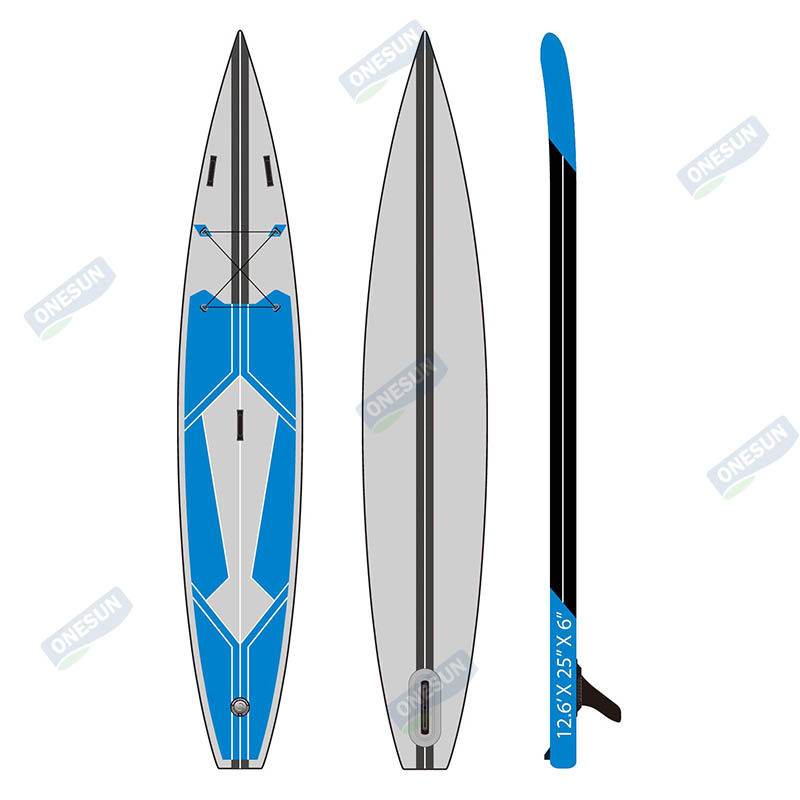
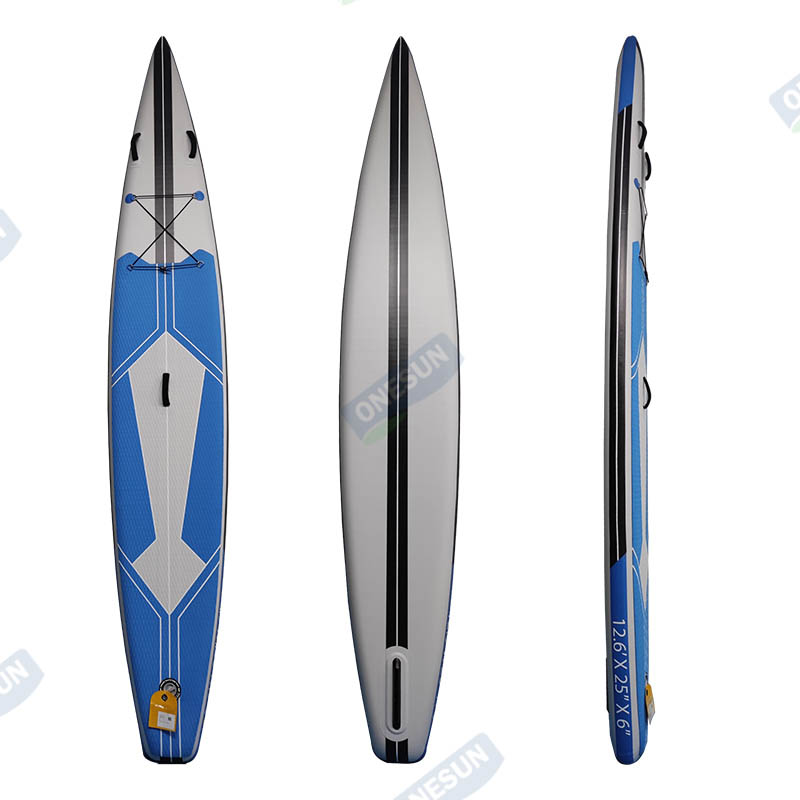
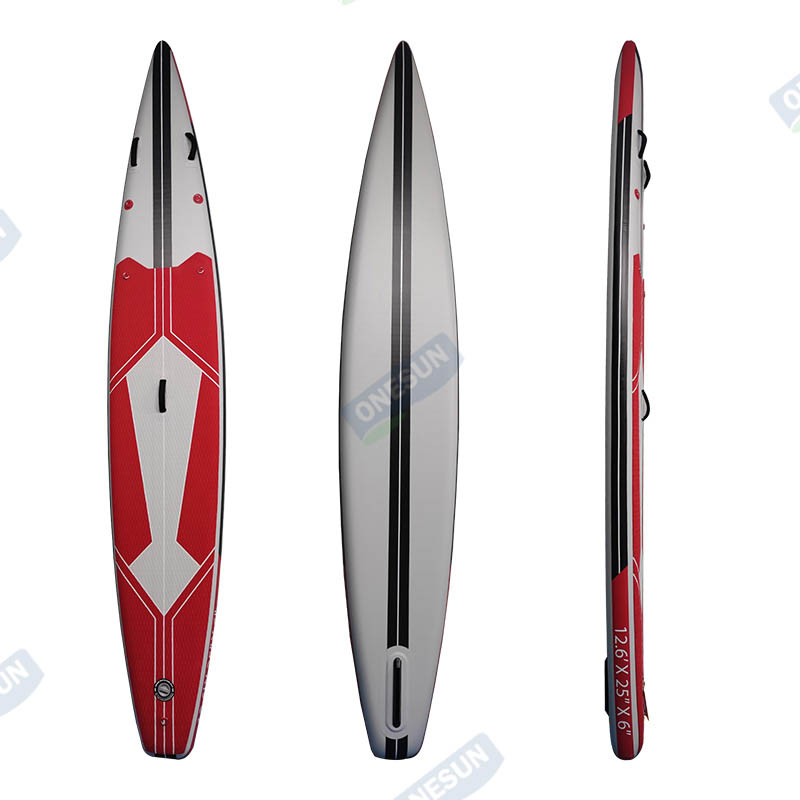
Par exemple, le Planche de SUP ORace Fabriquée en PVC et dotée d'une technologie Drop Stitch, cette planche est conçue pour la compétition et l'entraînement quotidien. Ce type de produit permet aux distributeurs de diversifier leur gamme de SUP.
6. Examiner les accessoires et les options d'ensemble complètes
Lors de l'achat en gros de planches de SUP gonflables, la planche elle-même ne représente qu'une partie du produit final. Les accessoires peuvent avoir un impact significatif sur le prix de vente et le confort du client.
Les accessoires courants comprennent une pagaie, une laisse, une pompe à main, un sac à dos ou un sac de transport, un kit de réparation et un système d'ailerons. Des accessoires optionnels peuvent également être ajoutés en fonction du marché cible.
Avant de passer commande, demandez au fabricant une liste de colisage complète et vérifiez si les accessoires sont inclus de série ou en option. Cela vous permettra de calculer le coût total et de comparer plus précisément les différents fournisseurs.
7. Recherchez les options de personnalisation et les options OEM
Pour les marques et distributeurs de produits outdoor établis, la personnalisation peut s'avérer plus avantageuse que l'achat d'un produit standard. Un fabricant disposant de capacités OEM et ODM peut personnaliser les couleurs, les graphismes, les logos, les accessoires, l'emballage et d'autres détails du produit selon les exigences de l'acheteur.
La personnalisation est particulièrement utile lorsque l'on souhaite créer une gamme de produits de sports nautiques cohérente au lieu de se concentrer uniquement sur la concurrence par les prix.
Avant de démarrer un projet sur mesure, veuillez confirmer les options de personnalisation disponibles, les exigences minimales de commande, le processus d'échantillonnage, le délai de production, les spécifications d'emballage et les procédures de contrôle qualité.
Il est possible de développer des modèles de planches de SUP gonflables adaptés aux exigences de différents marchés et marques.
8. Évaluez le fabricant, pas seulement le produit.
Une planche de SUP gonflable performante est importante, mais la capacité du fournisseur est déterminante pour la réussite à long terme d'un programme de vente en gros. Les acheteurs doivent évaluer l'expérience en fabrication, la capacité de production, la gestion de la qualité, les compétences en développement de produits, l'expérience à l'export et la communication.
Un fabricant fiable devrait être en mesure de fournir, sur demande, des spécifications produit claires, des échantillons, des informations sur l'emballage, des mises à jour sur la production et une documentation relative au contrôle qualité.
Il est également utile d'examiner la gamme de produits plus étendue du fournisseur. Par exemple, un fabricant proposant différents modèles de SUP peut faciliter le développement d'un portefeuille de produits complet pour les distributeurs, plutôt que de les obliger à collaborer avec plusieurs usines.
9. Comparez attentivement les devis de gros
Le prix unitaire le plus bas n'est pas toujours synonyme d'offre de gros avantageuse. Lors de la comparaison des devis, il est essentiel de considérer l'ensemble de l'offre : composition du panneau, spécifications des matériaux, accessoires, emballage, personnalisation, délai de production, normes de contrôle et conditions d'expédition.
Demandez aux fournisseurs de vous fournir des devis basés sur les mêmes spécifications afin de pouvoir effectuer une comparaison pertinente. Si un fournisseur propose un prix nettement inférieur, vérifiez si la différence provient de l'épaisseur du matériau, des accessoires, de la construction, de l'emballage ou d'autres spécifications.
10. Développez une gamme de produits au lieu d'acheter un seul modèle.
Pour les détaillants et les distributeurs, proposer plusieurs modèles de planches de SUP gonflables permet de toucher différents segments de clientèle. Une gamme de produits pourrait comprendre une planche polyvalente pour les loisirs, un modèle plus grand pour les familles ou la pratique en tandem, et des planches spécialisées pour le yoga, la randonnée ou la compétition.
Par exemple, le planche de SUP tandem peut compléter les modèles standards en ciblant les clients qui souhaitent partager leur expérience de canoë-kayak avec une autre personne.
Liste de vérification finale pour les acheteurs en gros
Avant de passer une commande groupée, assurez-vous d'avoir vérifié les points suivants :
Longueur, largeur et épaisseur de la planche
Capacité de charge et application prévue
construction à point de chute
Spécifications du PVC et des matériaux
Qualité des coutures et des collages
Performances de gonflage et d'étanchéité à l'air
Accessoires inclus et en option
exigences en matière d'emballage et d'expédition
Capacités OEM et de personnalisation
Approbation des échantillons et contrôle de la qualité
capacité de production et délai de livraison
Tarifs de gros et conditions de commande
Choisissez un fournisseur de planches de SUP gonflables pour votre entreprise
Choisir la planche de SUP gonflable idéale exige de trouver un équilibre entre performance, qualité des matériaux, possibilités de personnalisation, prix et fiabilité de fabrication. Pour les acheteurs en gros, le meilleur fournisseur n'est pas forcément celui qui propose le prix initial le plus bas, mais celui qui est capable de fournir régulièrement des produits conformes à vos spécifications et aux exigences du marché.
ONESUN est spécialisée dans les produits gonflables pour sports nautiques et propose une gamme de planches de SUP fabriquées en drop stitch et en PVC. L'entreprise intègre le développement de produits, la fabrication et l'exportation, offrant ainsi des solutions aux distributeurs et aux marques recherchant des partenariats d'approvisionnement à long terme.
Si vous développez une nouvelle gamme de produits SUP ou si vous recherchez un fournisseur fiable pour des commandes en gros, l'examen des spécifications du produit et la discussion directe de vos besoins avec le fabricant constituent la meilleure façon d'identifier la solution adaptée.




 IPv6 RÉSEAU PRIS EN CHARGE